
Ohio Police Blotter
Ohio police blotter records are kept by law enforcement agencies in all 88 counties. You can search for arrest logs, incident reports, and booking records through sheriff offices, city police departments, and the Ohio Bureau of Criminal Investigation. Each county sheriff and municipal police department keeps its own set of police blotter records. The state also runs several databases that pull data from local agencies. Whether you need to find a recent arrest report or look up an older case file, Ohio gives you multiple ways to search police blotter records online and in person. This page covers the main sources and how to get the records you need.
Ohio Police Blotter Overview
Ohio Police Blotter Records
Police blotter records in Ohio fall under the state's public records law. Ohio Revised Code § 149.43 says that records kept by any public office are open to the public unless a specific law exempts them. That includes arrest logs, incident reports, and booking sheets held by police departments and sheriff offices across the state. Anyone can ask for these records. You do not need to give your name or a reason for your request. The law says public offices must respond promptly and let you look at records during normal business hours at no cost.
There are limits. Some police records stay confidential under ORC § 149.43(A)(1)(h). If releasing a record would reveal the name of an uncharged suspect, a confidential informant, or investigatory techniques, the agency can hold it back. DNA records, certain inmate records, and personal details of designated public service workers also stay sealed. But the basic police blotter, which logs arrests and charges, is public in most cases.
The Ohio Attorney General's Office provides help when agencies do not comply. Their Public Records Unit can be reached at (614) 466-2872. If a records request is denied, you can also file a formal complaint with the Ohio Court of Claims at 65 South Front Street, 3rd Floor, Columbus, OH 43215.
The Ohio Attorney General's Sunshine Laws resources page shows both requesters and public offices how to handle records requests the right way. Public officials must complete training on the Public Records Act at least once per elected term. An online version of the training is available through the Attorney General's partnership with the Ohio Auditor of State's Office.

Ohio Bureau of Criminal Investigation
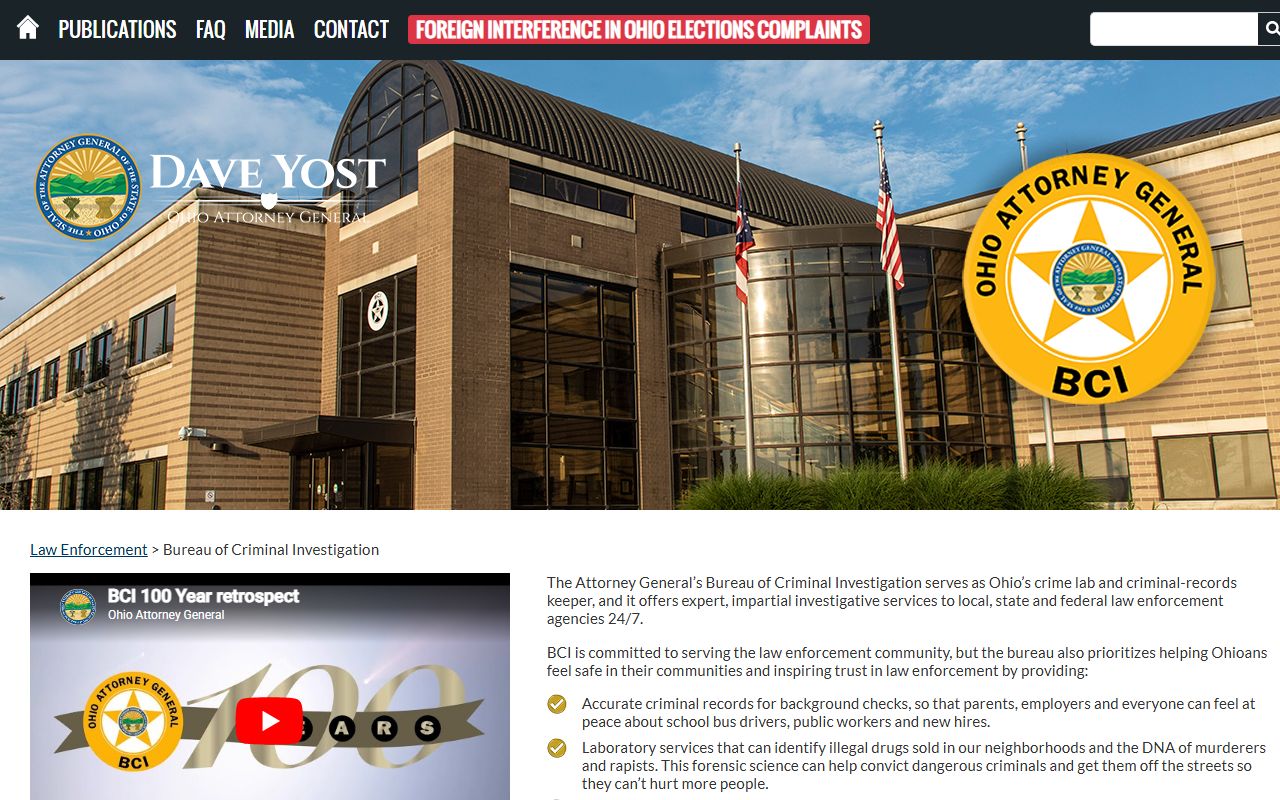
The Ohio Bureau of Criminal Investigation is the state's central hub for criminal records. BCI is a division of the Ohio Attorney General's Office and processes about one million checks each year. The bureau keeps fingerprint records, criminal history data, and lab results tied to cases from across Ohio. BCI runs facilities in London, Bowling Green, Richfield, and Youngstown. The main office sits at 1560 State Route 56 Southwest in London, OH 43140. Call 877-224-0043 for general help.
Under ORC § 109.60, police chiefs and county sheriffs must report arrest data to BCI right after an arrest. That means fingerprints and completed forms go straight to the bureau. ORC § 109.572 also requires clerks of courts to send weekly case summaries for felonies and certain misdemeanors. This keeps the statewide criminal records database current and useful for police blotter research.
The screenshot below shows the BCI main page on the Ohio Attorney General's website.
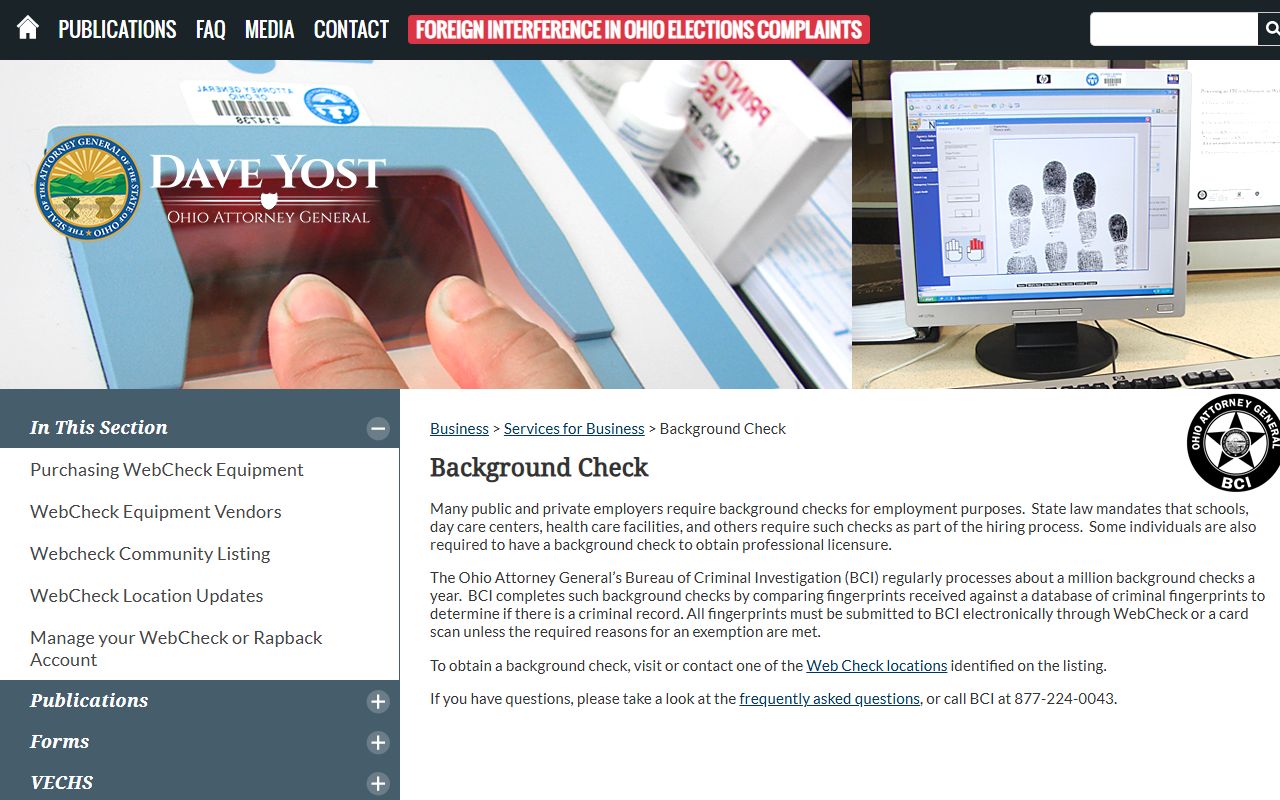
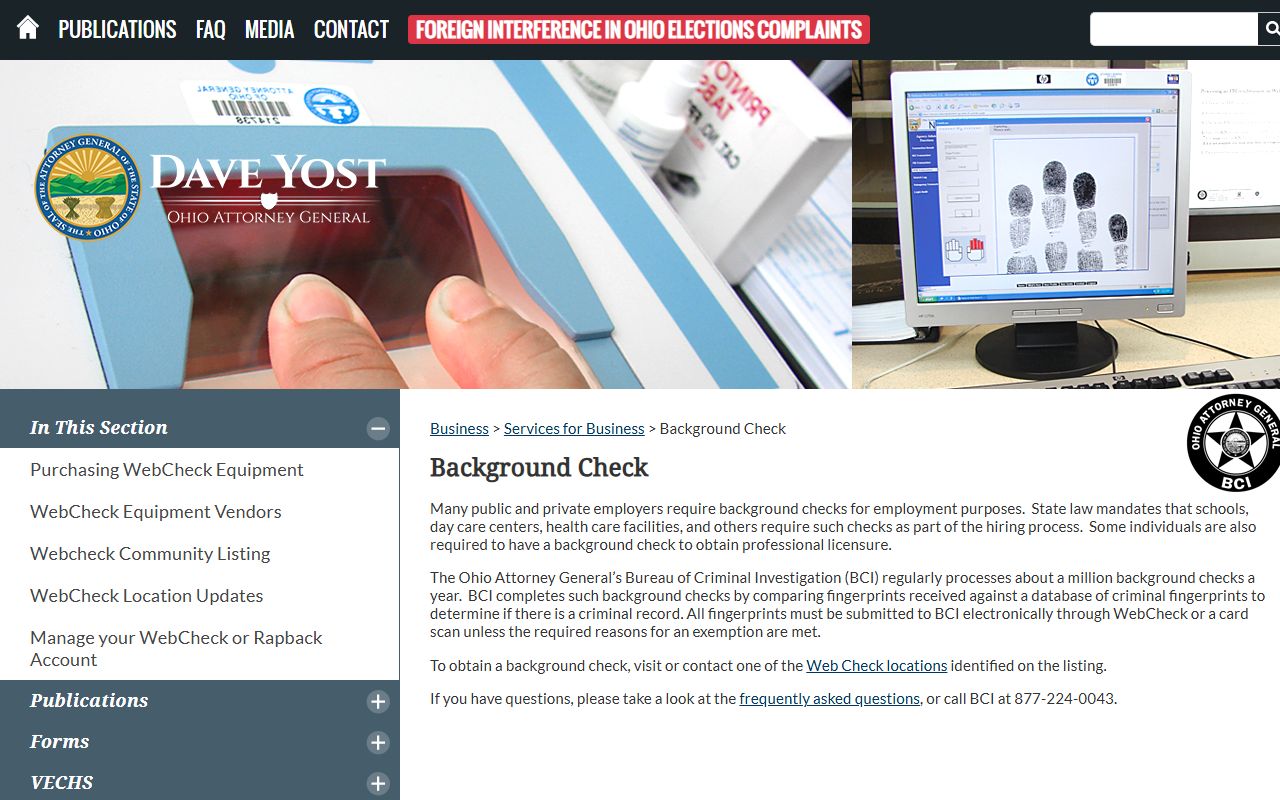
BCI also offers criminal record searches through the WebCheck system. All fingerprints must go through electronic submission at a WebCheck location. A BCI-only check costs $22 to $27. A combined BCI and FBI check runs $52 to $57. Results come back in about two business days, though some take four to six weeks.
Ohio State Highway Patrol Records
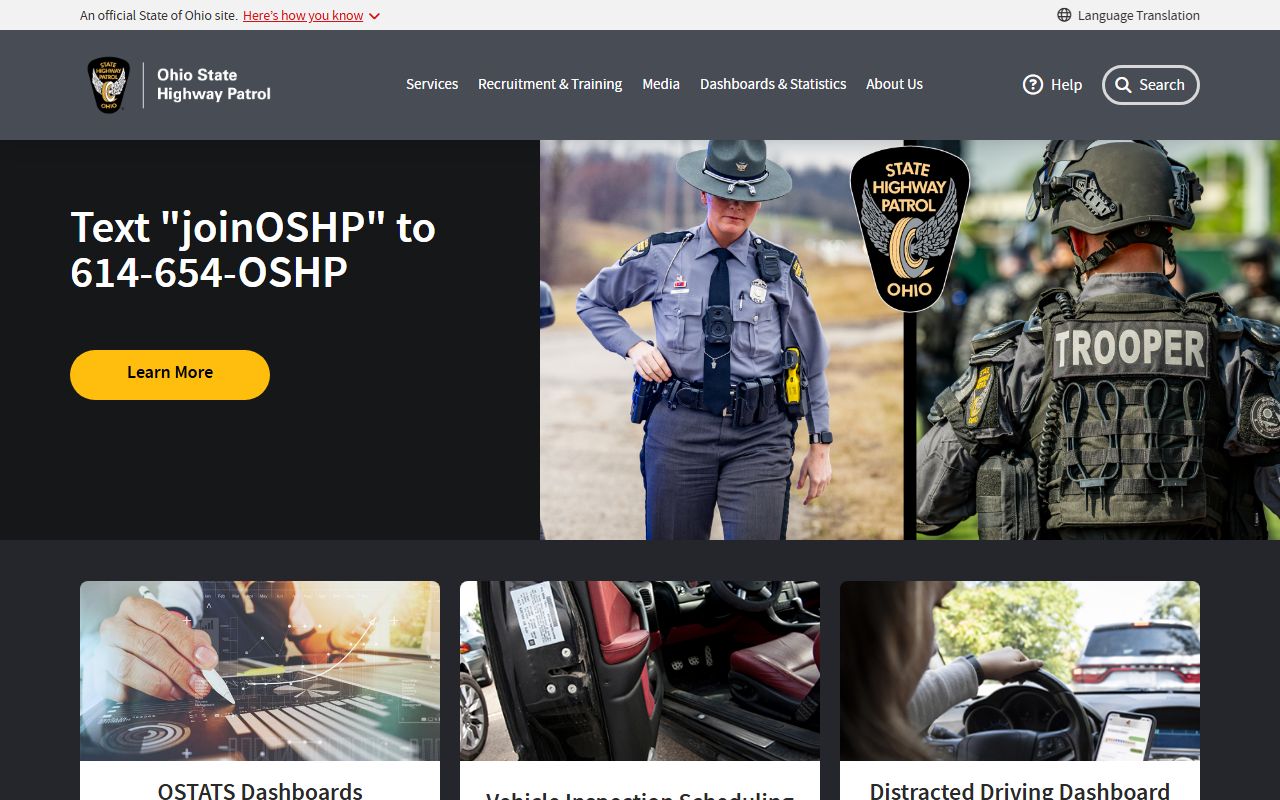
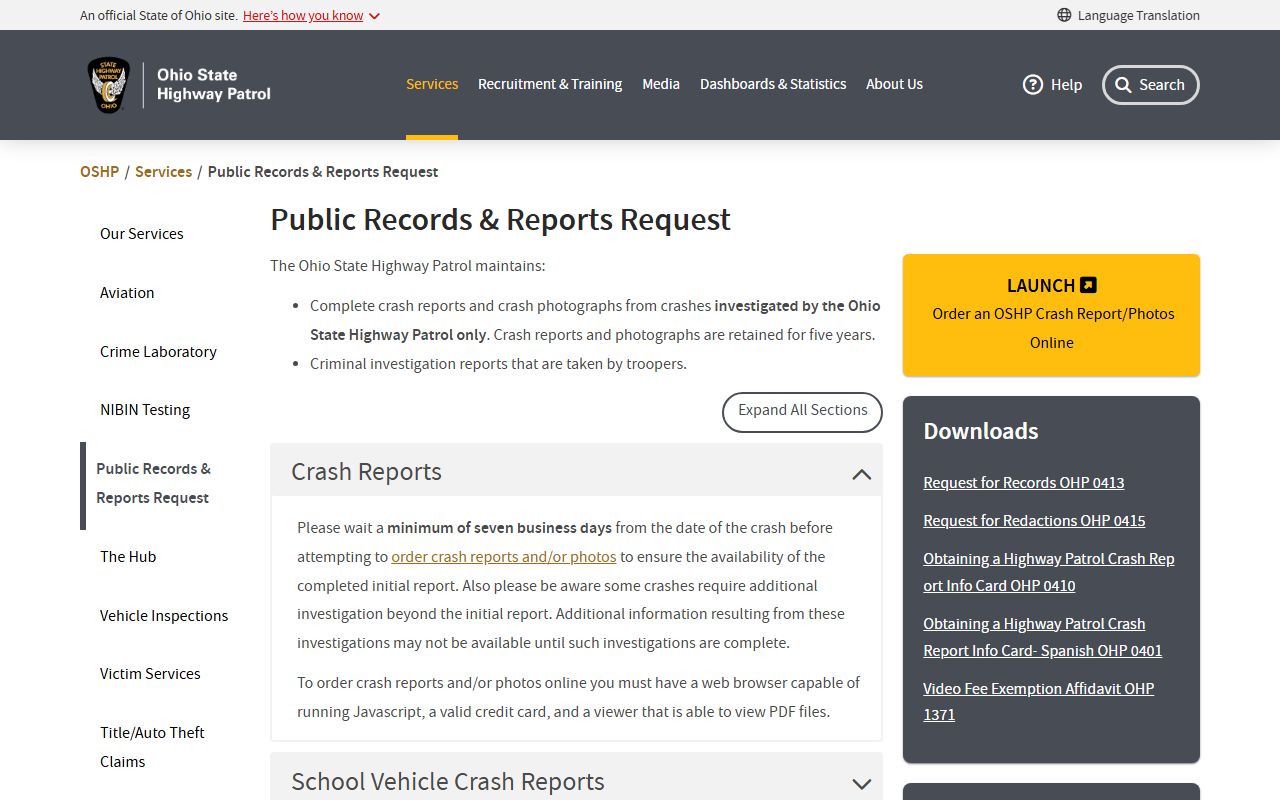
The Ohio State Highway Patrol keeps crash reports, criminal investigation reports, and other law enforcement records from incidents troopers handle on Ohio highways. Their OSTATS Dashboards give you five years of crash data broken down by severity, road, time, and day. The Patrol also runs a distracted driving dashboard with stats and video.
To get a copy of a police blotter report from OSHP, use their public records request portal. Wait at least seven business days after a crash before ordering. A crash report costs $4.00. Crash photos run $4.00 for a download or $12.00 on DVD. They take Visa, MasterCard, Discover, and American Express. You can also reach Central Records by email at ADCentralRecords@dps.ohio.gov or call (614) 466-3536.
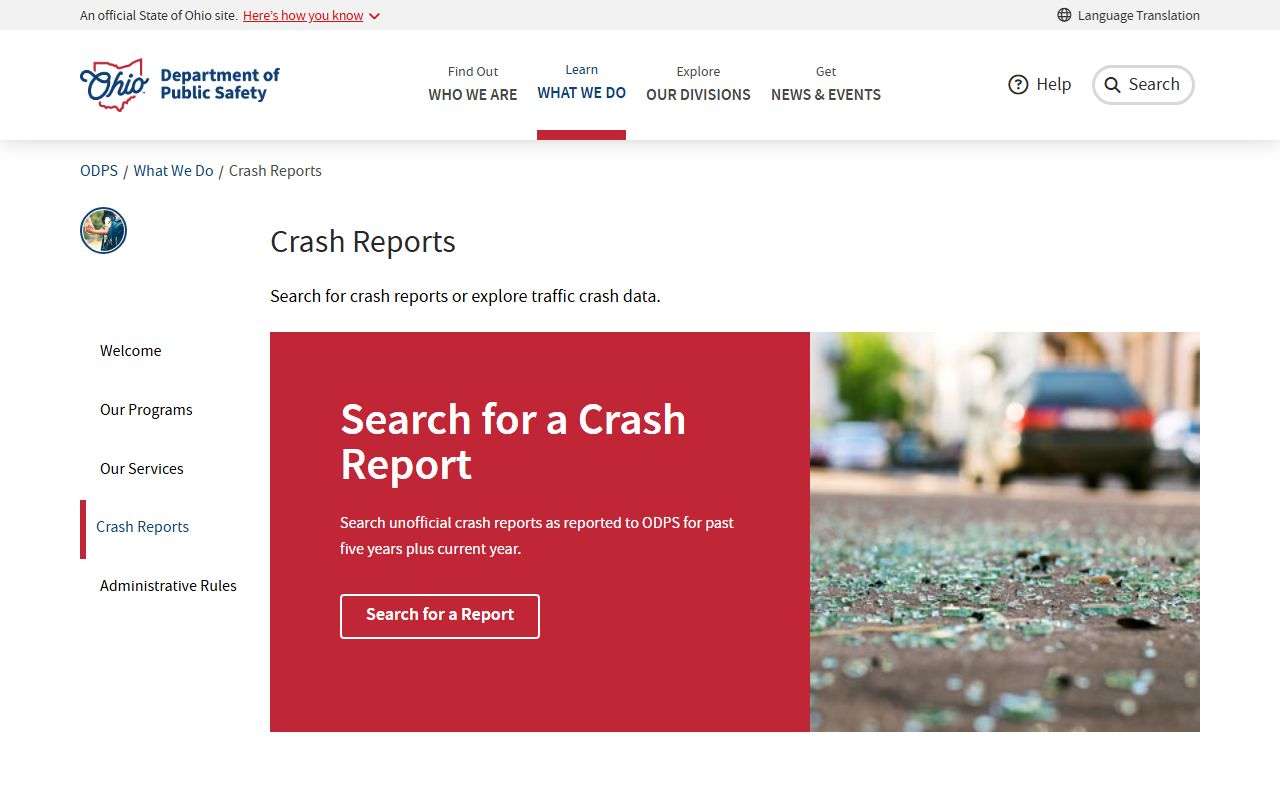
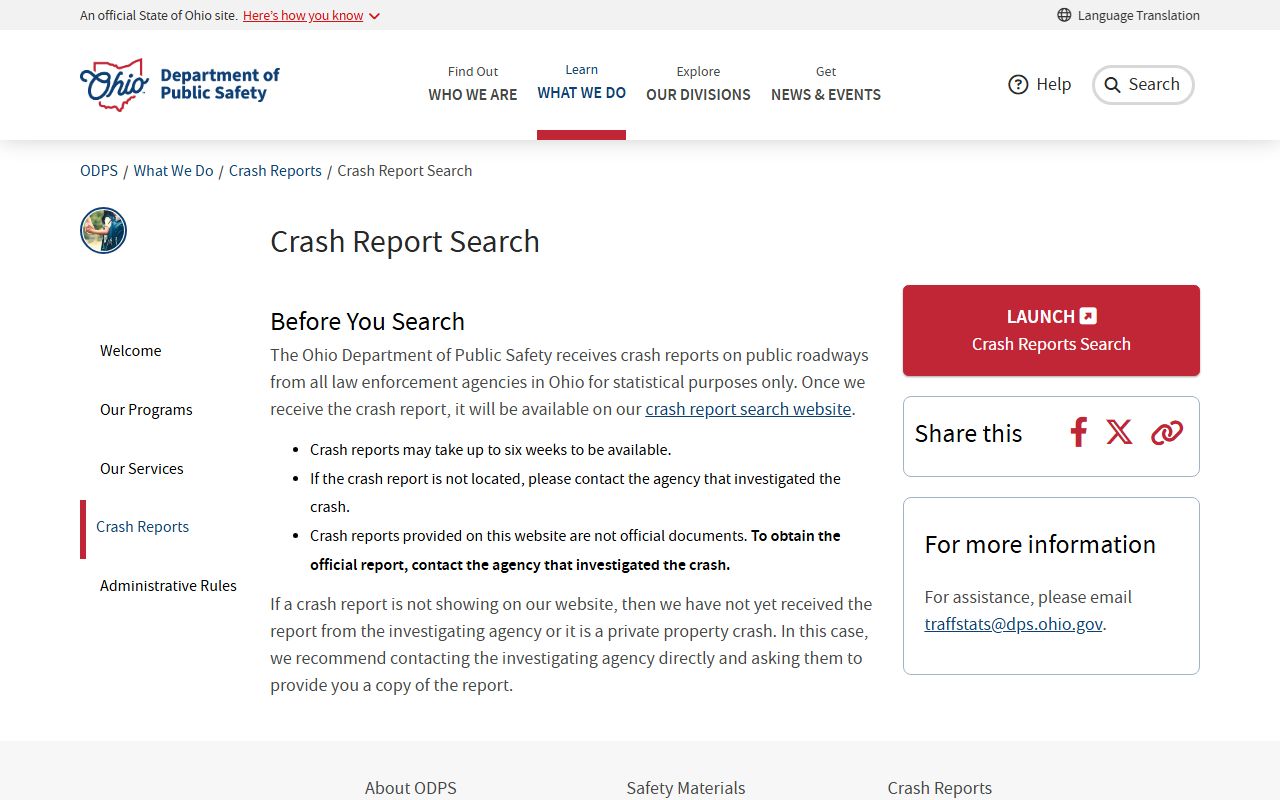
The Ohio Department of Public Safety also serves as a central point for crash report info. They get reports from all law enforcement agencies in Ohio. Their crash report search tool lets you look up unofficial reports for statistical purposes. Keep in mind that these reports can take up to six weeks to show up, and they are not official copies. For an official report, contact the agency that handled the case.
Ohio Court Records and Police Blotter
Court records tie directly to police blotter data. When someone gets arrested, the case moves from the police blotter to the court system. The Ohio Supreme Court trial courts directory lists every court in all 88 counties. You can find Court of Common Pleas divisions, municipal courts, and county courts with links to local rules and websites.
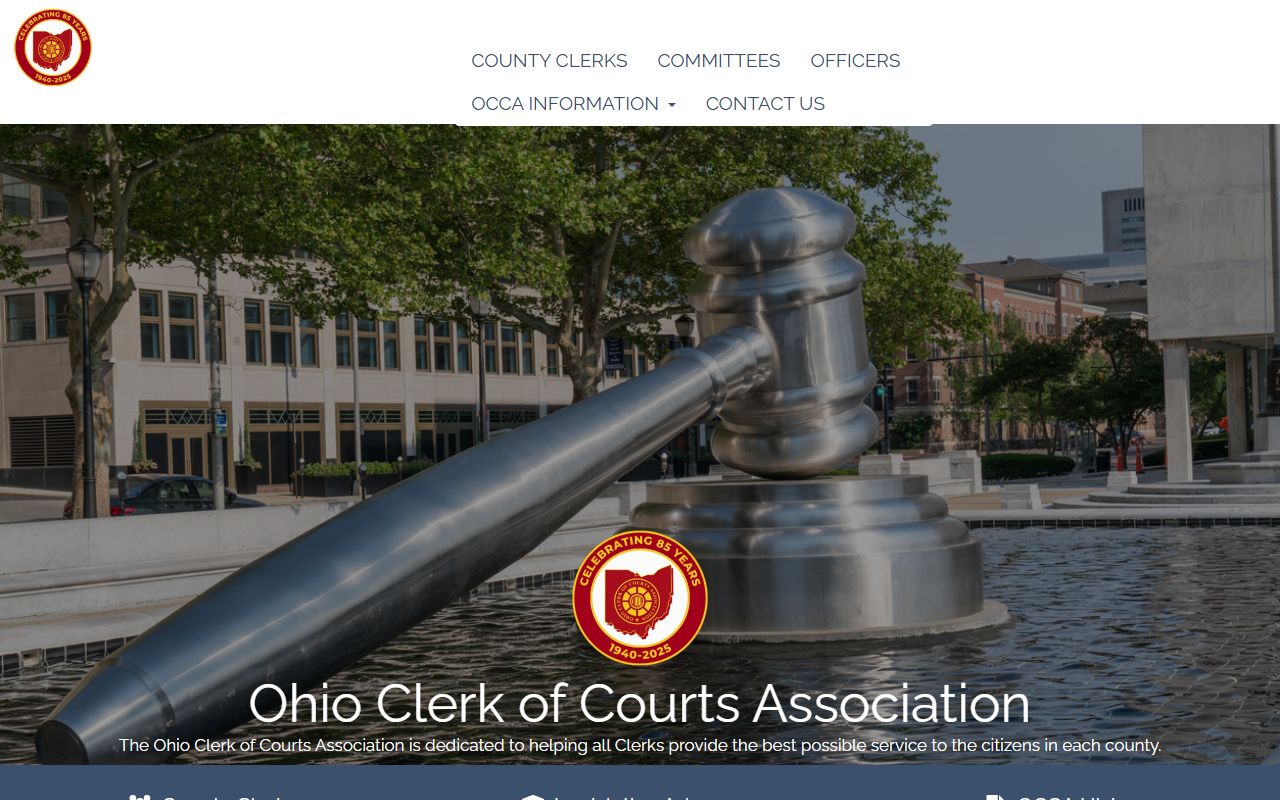
The Ohio Clerk of Courts Association gives you a statewide directory of clerk offices. Each county clerk maintains criminal case records, civil filings, and traffic cases. Many clerks now offer online case search tools. The association site can point you to the right office for any county.
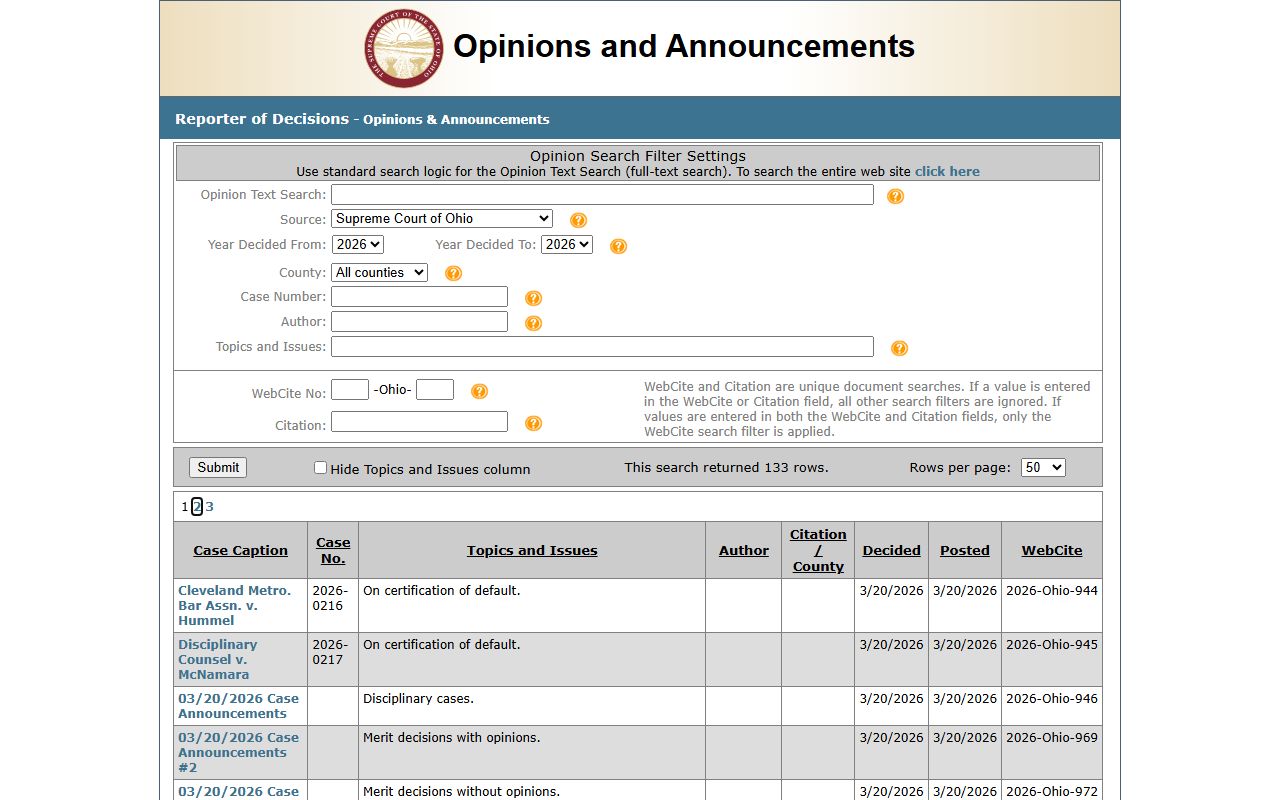
The Ohio Supreme Court Records of Decisions holds opinions and rulings going back to 1992. While these are appellate records, they can provide context for cases that started on a police blotter and worked through the courts. The database shows case captions, topics, and authoring justices.
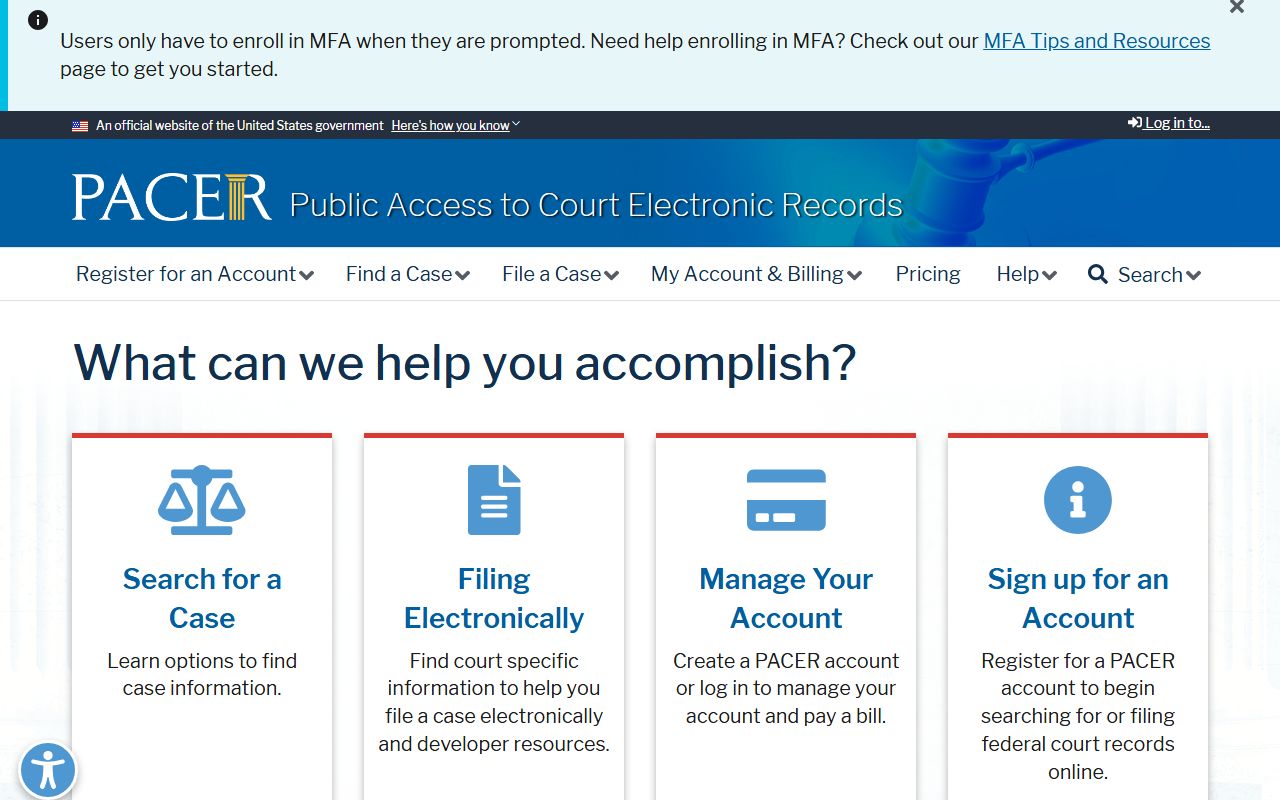
For federal cases in Ohio, PACER covers the Ohio Northern and Southern District Courts and both bankruptcy courts. Registration is needed and pages cost $0.10 each. Fee waivers exist for some users.
Ohio Police Blotter Laws
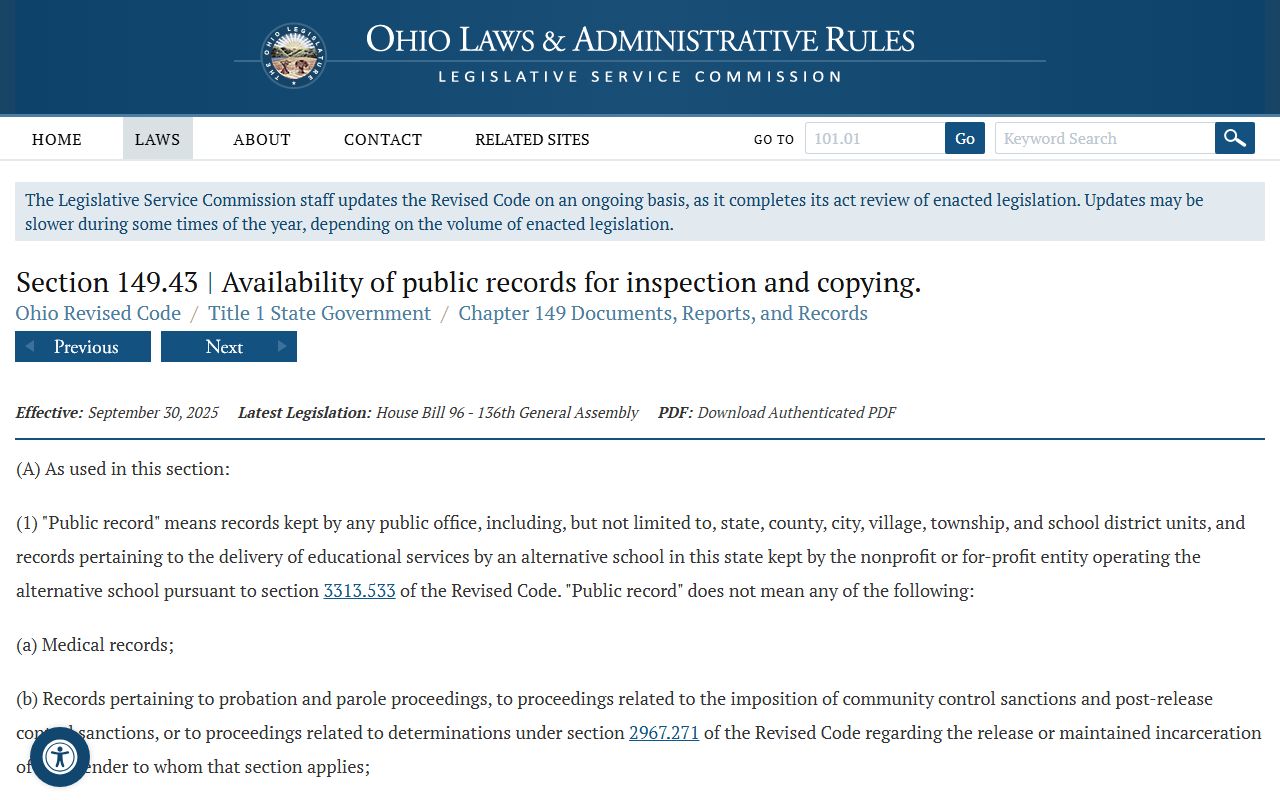
The Ohio Revised Code § 149.43 is the backbone of public records access in the state. It defines a public record as any record kept by a public office at the state, county, city, village, township, or school district level. The law covers police blotter data held by every agency. Copies can be charged at actual cost, but just looking at records is free. If an agency denies a request, they must cite the exact legal reason.
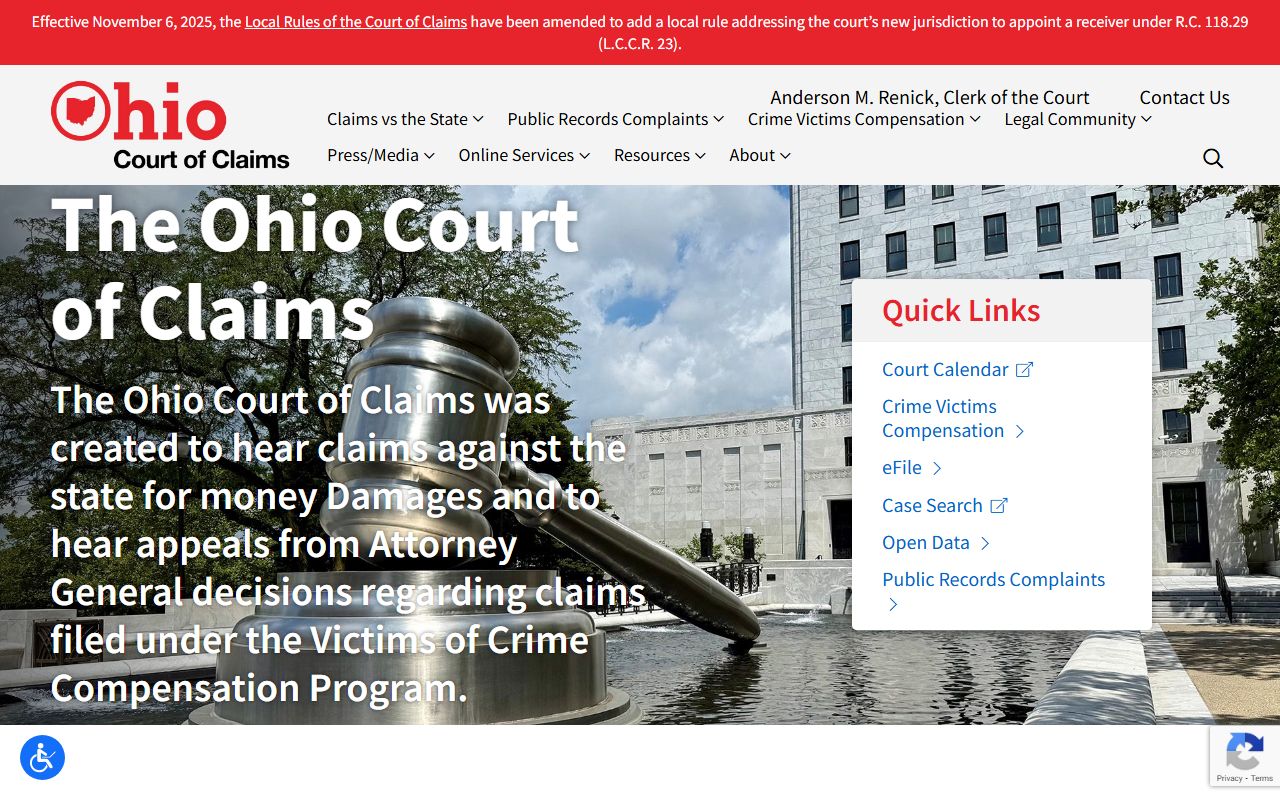
The Ohio Court of Claims handles formal complaints when public records requests get denied. Under ORC 2743.75(D), you can file a mandamus action if an agency refuses to turn over police blotter records. The court is at 65 South Front Street, 3rd Floor, Columbus, OH 43215. Call (614) 387-9800 for more details.
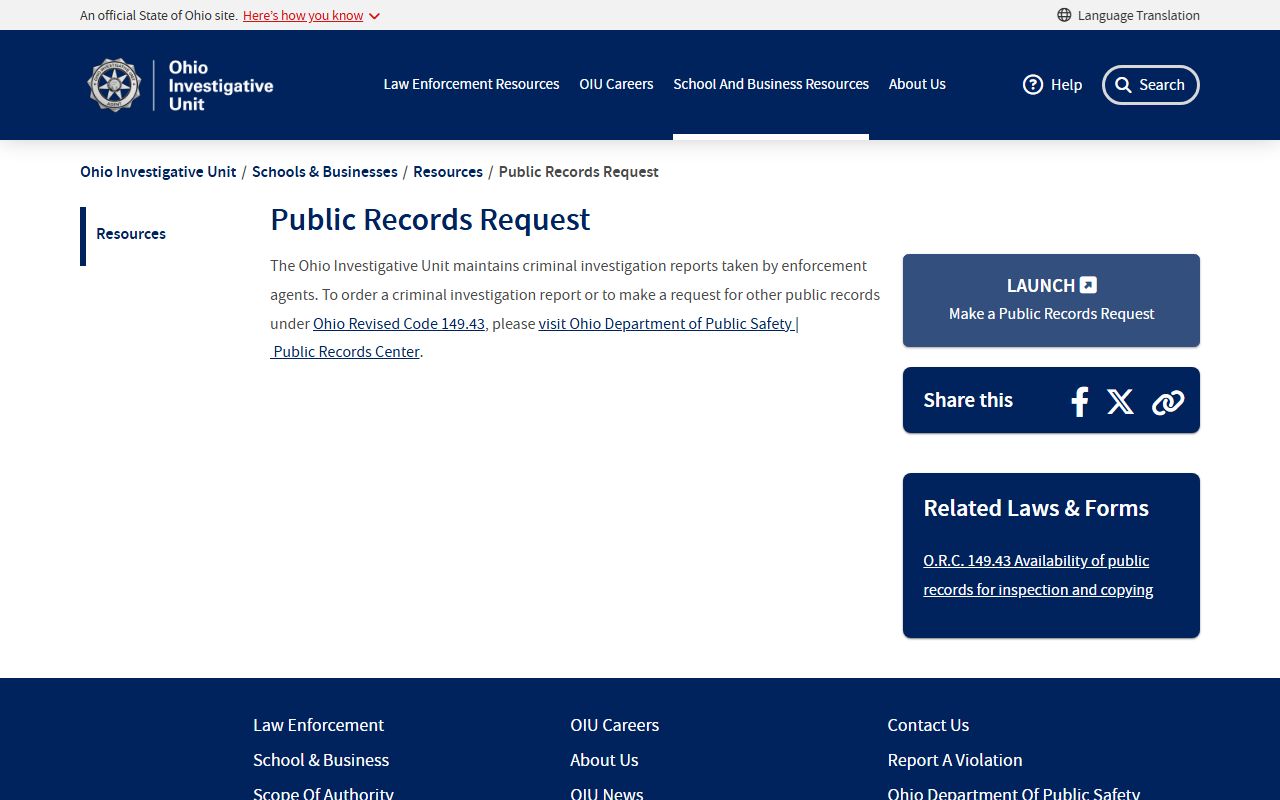
The Ohio Investigative Unit keeps criminal investigation reports from enforcement agents. Those records are stored by the Ohio State Highway Patrol's Central Records section. To get a copy, go through the Ohio Department of Public Safety Public Records Center.
How to Get Ohio Police Blotter Records
Getting police blotter records in Ohio is simple. You do not need a form. You can ask in person, by phone, by email, or by mail. No one can ask you for your name or why you want the record. The agency must respond promptly.
Start at the local level. If you want a police blotter from a specific city, call that city's police department records division. For county-level records, contact the sheriff's office. Most sheriff offices have a records section that handles requests during business hours. Some have online request forms. Fees differ by agency. Many give out incident reports for free. Others charge a small per-page fee, usually $0.05 to $0.10.
For statewide searches, BCI is the best option. They keep the largest criminal records database in Ohio. You can also search court records through the clerk of courts in each county. Some counties offer free online case lookup tools. Others require you to visit the courthouse.
When you make a request, try to include as much detail as you can. A case number helps a lot. If you don't have one, give the person's name, the date of the incident, and the location. The more info you provide, the faster the agency can find what you need.
Note: Some police blotter records may be partially redacted under ORC § 149.43(A)(1)(h) to protect uncharged suspects or confidential informants.
Browse Ohio Police Blotter by County
Each of Ohio's 88 counties has a sheriff's office that keeps police blotter records. Pick a county below to find local contacts and resources for police blotter records in that area.
Police Blotter in Major Ohio Cities
Major cities in Ohio run their own police departments with separate records divisions. Pick a city below to find police blotter resources for that area.